Live Matches
1st ODI - England Tour of West Indies
🇯🇲 WI 189/6
🏴󠁧󠁢󠁥󠁮󠁧󠁿 ENG 253/9

West Indies need 65 runs in 68 balls

Day 2 - India Tour of Bangladesh
🇮🇳 IND 410/6
🇧🇩 BAN 68/3

Bangladesh trail by 342 runs

T20I - Pakistan Super League
🏏 LHR 156/4
🏏 KHI 182/7

Lahore need 27 runs in 22 balls

‘Years in the making’ – England’s experience combines to give them shot at glory

England’s past and present captains turned a difficult start into a march to the T20 World Cup final
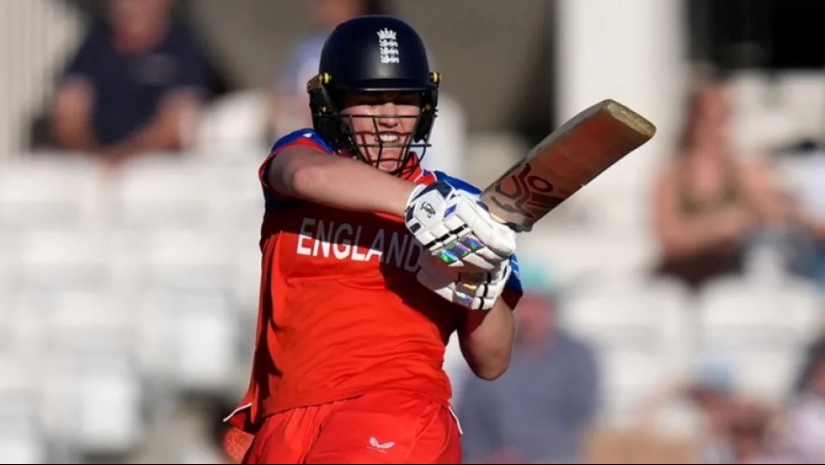
Leading from the front: Nat Sciver-Brunt rebuilt England’s innings  •  ICC via Getty Images

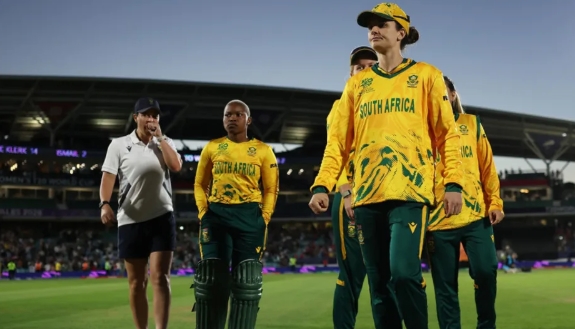
England‘s desire was there for all to see. Even a defeated South Africa coach, Mandla Mashimbyi, couldn’t help but notice that his side’s T20 World Cup semi-final opponents “wanted it a little bit more today”.

And so, England will face Australia in Sunday’s title decider at Lord’s, when the hosts will look to emulate their 50-over success of 2017.

Two of the three remaining members of that campaign, Nat Sciver-Brunt and Heather Knight, were instrumental in securing a 40-run victory at The Oval against South Africa, who had had the better of them in recent World Cup knockouts.

The other, Danni Wyatt-Hodge, had lost her place in the starting XI by the time England lifted the trophy back then but she is now this tournament’s leading run-scorer with 294 runs at 73.50 and a strike rate of 152.33. In a rare off night, Wyatt-Hodge managed just 12 on Thursday before she had her stumps rearranged by Marizanne Kapp, who combined with Shabnim Ismail for a destructive opening salvo that had England 23 for 3 inside the powerplay.

Then Sciver-Brunt and Knight, England’s current and former captains, combined for a 133-run stand which defined the course of the match and turned the tables on South Africa, who had won their previous two semi-finals, at last year’s 50-over World Cup and the 2023 T20 edition.

It had been uncertain until match eve whether Sciver-Brunt would even play, after a recurrence of a calf injury had kept her out for the previous three games. But an intensive rehabilitation programme had her more than ready for the moment. A boundary-laden 75 off 47 balls, the same number of deliveries faced by Knight for her 58, helped to lift England out of a hole and into the final.

“I was very nervous going in and I suppose quite emotional about it yesterday, the occasion and what we’ve been able to do as a team,” Sciver-Brunt said. “Trying to live up to the three games I missed and still have an impact as a leader and as a captain.

“I managed to put those thoughts to bed for the warm-up starting, that is the moment where you switch on to game mode and get into the day. I’m just so excited and proud of what I’ve been able to do today.”

It was the culmination of England’s undefeated progression through the group stages, characterised by the batting group finally living up to the enviable depth they offered on paper, with players able to step up if others fail or are injured. That has largely been because of Wyatt-Hodge’s scintillating form and Sophia Dunkley, who made way at No. 3 for Sciver-Brunt despite scoring 57, 14 and 49 not out in her three appearances.
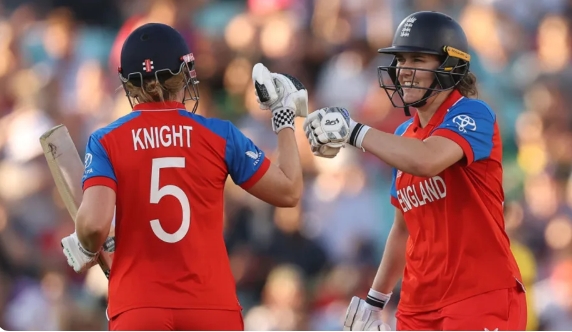
Past and present: Heather Knight and Nat Sciver-Brunt dominated England’s innings • ICC via Getty Images

In the matches she has played, Sciver-Brunt has been in fine touch too. That is despite two warm-up games, against Australia and India, representing the sum total of her match-specific preparation after she initially injured her calf playing domestic cricket on April 29. She has 169 runs for the tournament at 84.50 and 159.43 and this innings was her best so far.

“When you see a home World Cup in the diary, you always imagine yourself there at the final with a chance to lift the trophy, so that drive has always been there,” Sciver-Brunt said. “It’s a great common goal to have as a team, to be able to try and reach a final of a home edition of the World Cup.

“We probably didn’t start the game as well as we’d want to but South Africa have some world-class opening bowlers that can tear batting line-ups apart. Heather and I knew we had a big job to do and used all of our experience.”

Knight was replaced by Sciver-Brunt as captain last year following England’s group-stage exit at the 2024 T20 World Cup and subsequent winless Ashes tour of Australia. Knight faced a race to be fit for the 2025 ODI World Cup after a serious hamstring injury but has remained one of England’s most reliable performers with the bat since.

“Heather and I have shared some brilliant partnerships throughout our careers and we’ve got a great understanding between each other of each other’s games and the overall plan of where we need to go as a side whilst batting,” Sciver-Brunt said.

“To share it with her has been, I suppose, years in the making of us experiencing what we have in our careers and England through the years of ups and downs that we’ve had. When you sit down and think about it when it’s all said and done, a really special moment for us both.”
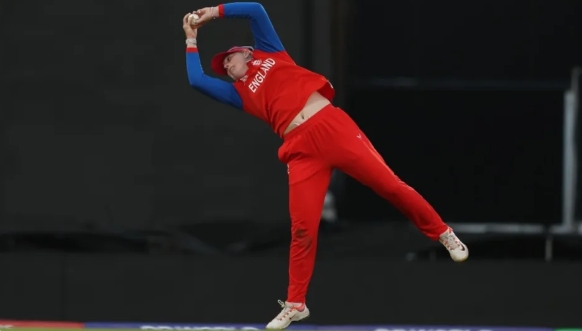
England’s fielding has been much sharper during this tournament • ICC via Getty Images

England’s fielding has been much improved under Charlotte Edwards, who replaced Jon Lewis as head coach after the Ashes, where the fielding woes which had dogged England’s T20 World Cup campaign of 2024 followed them.

“Lottie coming in after the Ashes where we were pretty poor and different times where we’ve had ups and downs with our fielding skill, it’s something that we wanted to work on as a team and have commitment from everybody to do that,” Sciver-Brunt said.

“The plan from Lottie and how we do that has been executed by Nick Wilton, our fielding coach, who encourages us to push ourselves as far as we can in the field and not put a ceiling on anything that we try and do.”

Wilton’s methods – some unconventional – also won high praise from Charlie Dean, who had stood in as captain for Sciver-Brunt and whose failed attempt to take a very tough chance off Annerie Dercksen running back from mid-off and leaping into the air, was a rare and minor blemish in the field for England on Thursday night. Sophie Ecclestone took two excellent catches to dismiss Laura Wolvaardt and Sune Luus while Wyatt-Hodge removed Sinalo Jafta with a stunning direct hit from backward point.

“It’s his disco fielding nights,” Dean said. “Under lights and I think he borrows his wife’s glittery, sparkly jacket and we do a piece of fielding to each song that he has on. He pumps the music up and tries to get us all real hyped up.

“I love the way he goes about getting us really passionate about fielding and doing different things so that it’s fun every time and I think we’re getting into that space where we want to really show off with our fielding. There’s that air of confidence about us now which has really grown over the last year.”
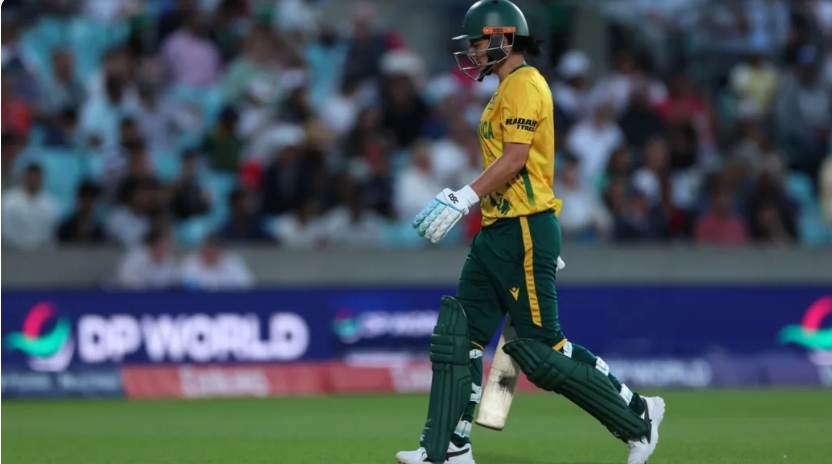
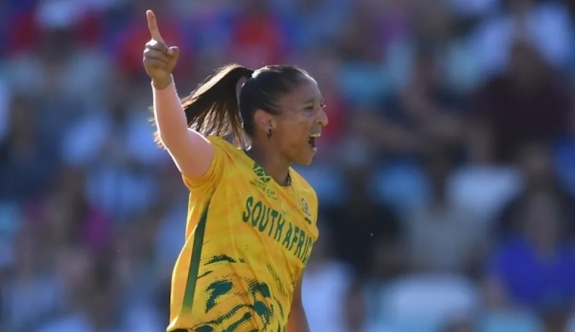
Clinging on to crashing out: semi-final exit exposes South Africa’s problems

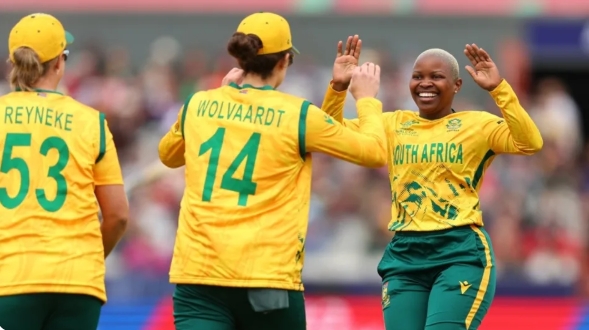
Marizanne Kapp and the recalled Shabnim Ismail were one of the best opening attacks at the tournament, but what followed was the problem

Marizanne Kapp can be a matchwinner, but she needs more support  •  PA Photos/Getty Images

The more finals you play, the closer you get to winning one. That was what South Africa told themselves after they reached three in three years (four if you count the men in the 2024 T20 World Cup, five if you count the Under-19 Women’s World Cup). What no one told them is that the more finals you play, the worse it will feel when you don’t make one. That’s what they experienced at The Oval on Thursday night.

After a campaign that looked scratchy from the start, South Africa’s shortcomings were exposed by a better team who did not allow them to scrape over the line. Honestly, that’s all they were doing before this after they made hard work of chases against Pakistan and Bangladesh and relied on one-woman heroics from Marizanne Kapp against India. Their match against Netherlands was the closest they came to a complete performance. Consider that the Dutch are tournament debutants who went winless and that already tells you how far off the pace South Africa were.

The problems were known before the semi-final but in case you missed it, here’s a recap. Laura Wolvaardt, the leading run-scorer at the last three ICC events has struggled to find her touch; her opening partner changed from Sune Luus to Tazmin Brits mid-tournament which did not help; Annerie Dercksen had only batted at No. 3 twice before this event and the last time was October 2024; Dane van Niekerk had barely played since reversing her retirement last last year and Chloe Tryon and Nadine de Klerk don’t spend enough time in the middle to have any form behind them. That’s one half of it.

On the bowling front, while bringing Shabnim Ismail back looked like a masterstroke, it also quickly became a case of placing all the eggs in one basket. Kapp and Ismail rolled back the years to form a perfect new-ball pair but there wasn’t much after them. While Ayabonga Khaka was decent at the death, she seemed to lack role clarity earlier on and de Klerk remains too inconsistent to be reliable. South Africa didn’t play any other seamers and the lack of variety in the attack as a whole has been criticised.

In the immediate aftermath, head coach Mandla Mashimbyi was not quite ready to dissect the issues and said he didn’t think “it’s time for us to nitpick” but acknowledged the lack of a second specialist spinner to partner Nonkululeko Mlaba was a problem. “With another frontline spinner, we will be better off,” he said.

Shabnim Ismail had an impact on her return, but future depth remains the question • ICC via Getty Images

They didn’t quite have another specialist spinner in the semi-final but the inclusion of Luus over van Niekerk did give them another bowling option. And then, Wolvaardt chose not to use it. In the passage of play where Nat Sciver-Brunt and Heather Knight put on a fourth-wicket partnership of 133, South Africa tried Tryon and then alternated between de Klerk, Khaka and Mlaba to no avail. Could a different type of bowler have helped? They’ll never know but an effort must be made to find a legspinner (Seshnie Naidu was part of the last T20 World Cup squad and should be developed) and a left-arm seamer.

Mashimbyi already appears to be thinking along those lines, but instead of looking forward he brought Ismail back. “We had too many of the same type of bowlers and teams could work out what we’re trying to do,” he said.

You could argue that was the case anyway because of the lack of penetration after Kapp and Ismail and equally with the batting where South Africa do not have players who can find other gears. Wolvaardt is an anchor, Brits is a run-a-ball player, Kapp is a trump card who will do a big job occasionally and de Klerk is a finisher but they need someone who can build an innings. Dercksen could become that player but only if she stops trying to hit every ball out of the park, which seems to be what South Africa want.

“We are a power team,” Mashimbyi said. “Today was probably testament to that in terms of us not scoring enough boundaries. If you don’t score boundaries in T20 cricket, you’re going to be found wanting.”

South Africa were the team with the most number of tournament sixes before this match and Dercksen, with six, is still the leading six-hitter. That’s a skill South Africa want to keep but they also need to develop her touch game, and their overall approach to spin. Between them, England’s spinners took 4 for 77 in 12 overs which strangled South Africa beyond recovery.

Laura Wolvaardt’s underwhelming tournament put pressure on the top order • ICC/Getty Images

Perhaps the saving grace is that South Africa didn’t get close enough to their target of 170 to set hearts aflutter and they cannot be accused of the dreaded choke. They were simply outplayed, and have been through many phases of this tournament including at the beginning, where they lost to Australia.

In the broader South African cricketing context, this concludes a forgettable first half of the year. Just four months ago, the men’s side emerged from a strong group stage to play so far beneath themselves at the T20 World Cup against New Zealand in the semi-final. Their performance, especially when they sat 77 for 5 in the 11th over, resurrected questions about South Africans and pressure. That’s the lowest hanging fruit but it cannot be the only reason South Africa still don’t have a World Cup in the cabinet.

Once the dust settles, the women’s set-up will have to look at some of the structural concerns and maybe even go back to West Indies’ captain Hayley Matthews’ words about the resource gap in the global game. South Africa are in a much better position than West Indies, both financially and from a depth of talent of perspective, but that doesn’t mean they can match England, Australia or India.

Crucially, South Africa doesn’t have one of the biggest things those three countries have: a women’s franchise T20 league. Speaking exclusively to Cricinfo afterwards Mlaba said: “If we had a league, maybe it could change the way we play. They play more cricket and they play against the best players in the world. They are used to pressure games.”

In the same league? Nonkululeko Mlaba said the absence of a local franchise competition hindered development • Getty Images

As things stand, a women’s SA20 is off the cards as the WPL is now played in the January window, there is no other viable time in the calendar and there is a concern about whether the quality of domestic cricket in South Africa is good enough for a privately owned league. The SA20 does run a schools’ league, which includes a girls’ competition, so a pipeline is being created but it could be years before that pays off.

For now, this team has to sit with the deep disappointment of another tournament ending without a trophy. While Mlaba described what she and her team-mates are going through as “hurt,” Mashimbyi almost had to take a different position to avoid the scars from settling.

“What pain?” He laughed when asked about the mood in the dressing room. “You just lose and you learn. And we’ve learned a lot in this World Cup. We’re going to make sure that we go back to the drawing board and put things in place that’s going to make us even more dangerous and even better as a team.

“We know where our gaps are, and that’s the only thing we can do really. We can’t change the results. It’s about the work that we put in going forward and making sure that when we get an opportunity to play a World Cup again or an ICC tournament, we are sitting at the same table as other teams.”

South Africa have a break before their home summer starts with a trip to Zimbabwe in September. They will also host India and Australia next season, with each of those opposition due to play a Test in South Africa alongside white-ball fixtures.

Hesson: Pakistan ‘have to hold their nerve’ to develop new talent

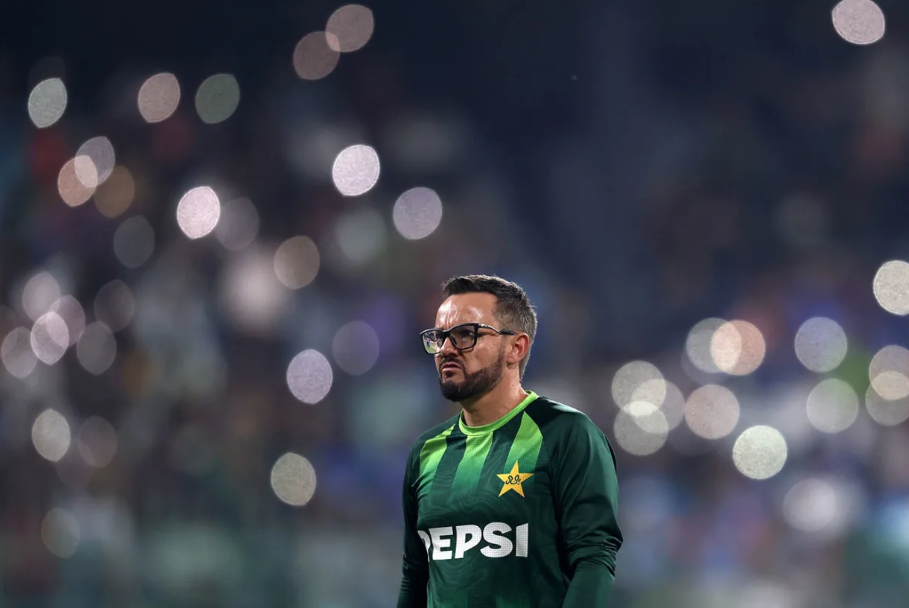
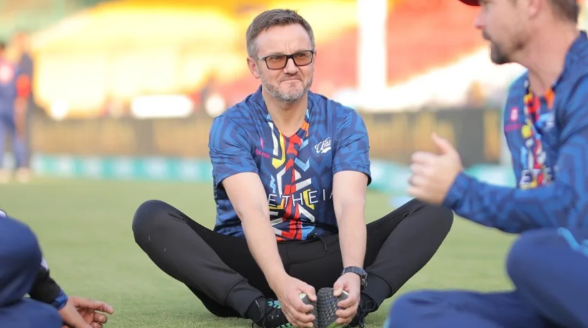
Mike Hesson was appointed Pakistan white-ball coach in May 2025  •  Matthew Lewis/ICC via Getty Images

“I like to deal with facts rather than fiction, and there’s a lot of narrative around the statement you’ve made.”

Mike Hesson is by and large a mild-mannered man, but a distinct hardness works its way into his voice when he bristles. It has been a generally amiable chat at the National Cricket Academy (NCA), a sprawling gated compound with crisply manicured gardens within the Gaddafi Stadium complex. It’s where Hesson’s office is located, with a long racetrack table in the middle, and a well-used whiteboard in the back, which looks to have been freshly scrubbed. Hesson was using it as part of his job training local coaches at the NCA.

But it is the international coaching role which has brought the itinerant New Zealander to Pakistan. He appears to have a mandate till late 2027, when the ODI World Cup will take place, one that, whichever way it goes, will likely end up shaping his legacy in this country.

What he’s rebuffing is the notion of inexorable decline within Pakistan cricket, and the contention that his arrival may have failed to sufficiently stall it. “In the Asia Cup last year, for example, we won every game except against India,” Hesson tells Cricinfo. “The reality is every single team in the world is struggling to beat India at the moment. Every team, not just Pakistan. Rightly or wrongly, Pakistan are gauged by how they perform against India. And at the moment, India is not only the best team; they’re the best team by a mile.

“At the T20 World Cup, we lost to England in the Super 8 off the back of a Harry Brook hundred and a very tight game outside of that. We won every [other] game except India. From 2023-2025, we didn’t make it out of the pool in ICC events. So you can’t go from eighth in the world to all of a sudden competing unless you start winning more regular games of cricket. And for us to go from winning 20-odd per cent to close to three-quarters of our games in a year is significant.”

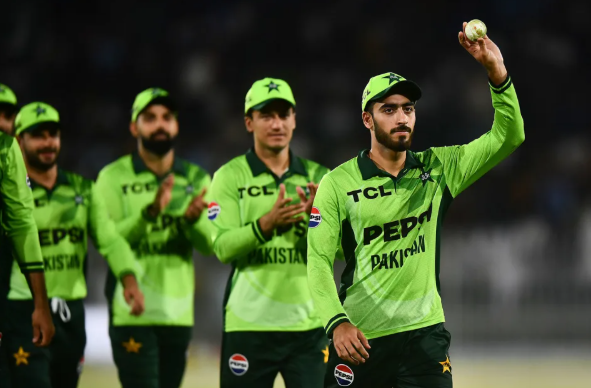
For Hesson, a man whose coaching career has followed an almost unique path, the process matters immensely. As we speak, the Pakistan men’s white-ball and red-ball sides are holding a summer camp in Lahore in the midst of a blistering heatwave. It’s come at the end of a year when Pakistan’s white-ball results, as Hesson points out, have ticked upwards, especially in bilateral and tri-nation series. Since Hesson took over, Pakistan have won two T20I tri-series, and lost just one of six bilaterial T20I series. Pakistan’s ODI record is slightly more mixed, but it still includes wins over South Africa, Australia and Sri Lanka.

It is true that South Africa and Australia did not send their best teams, but Hesson says all Pakistan can do is control their own performance and focus on improving it. And there is a lot to improve in Pakistan.

“The reality is when someone comes new into a job, they very rarely take over a team at the top of their game,” Hesson says. “I took over Otago, [who] hadn’t won a trophy for 20 years, [and they] won trophies. New Zealand, we obviously made some improvements, also with RCB [Royal Challengers Bengaluru in the IPL] and things are moving in the right direction there. Pakistan is similar to New Zealand in many ways. But it will take time. It took probably two-and-a-half to three years from a white-ball perspective to really turn things around with New Zealand, and then there was some ongoing success for the next three or four years.

Hesson: For us to go from winning 20 odd percent to close to three quarters of our games in a year is significant • AFP/Getty Images

“But to do that you actually have to hold your nerve and in New Zealand it’s easier because there’s less players, you know, so the depth is less. You know in larger countries, bigger player pools, the ability to hold your never and focus your talent on a smaller group of players is hard, because it’s really hard to develop a hundred players. Far easier to develop 20.”

Hesson’s stock grew in Pakistan not just through his international portfolio, but the work he did in two years at Islamabad United. He was appointed coach of the PSL franchise in 2024, leading them to their first title in six years in his inaugural season. It was that sort of immediate bounce the famously impatient PCB were after when he was offered the job, shortly after two previous overseas coaches, Gary Kirsten and Jason Gillespie, fell out with the board and resigned early into their stints.

But Hesson is dismissive of the idea that kind of instant turnaround in fortunes was ever possible at national level. “You can recruit in franchises,” he says simply. “The standard [between PSL and international cricket] is different. So to think that someone’s going to replicate what they do in PSL on the international stage in a variety of conditions, completely different pressures is very unrealistic.”

Pakistan have, however made the most concerted effort in a long-time to streamline their player pool. Last week, he found himself in the slightly unusual position of talking up the importance of Test cricket in Pakistan, when the PCB came up with a completely overhauled central contract system. Once they come into effect, they are set to reward specialist Test cricketers with significantly improved financial packages, which come at the expense of closing down T20 franchise opportunities for those players.

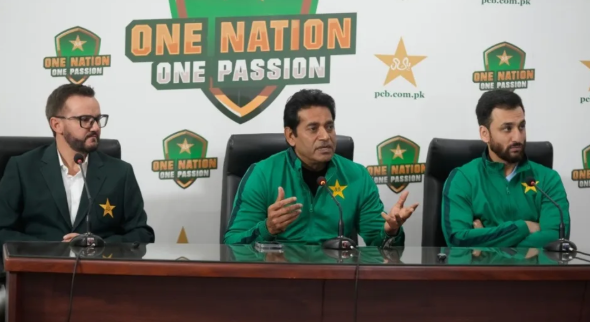
Hesson, seated alongside PCB chairman Mohsin Naqvi and director of cricket Aqib Javed, was most effusive about the document outlining the new structure, saying it could potentially become the “envy of the cricketing world.” His previous international employer, New Zealand, tried allowing players to represent New Zealand with casual contracts instead of signing up to full-time central contracts; Trent Boult and Kane Williamson were among a few to play the last few years of their international careers under that arrangement. But Hesson doesn’t think it’s been a success, saying New Zealand have realised it doesn’t work and has “upset many people”.

“When I talk about it being an envy of nations, at least we’ve tried to fit a model within the current environment rather than have an arbitrary model that used to work 10 years ago and just rolling it over and then all of a sudden we’ll give someone a casual contract or we’ll get someone a red-ball contract or whatever.

Mike Hesson won the PSL title as head coach of Islamabad United•Islamabad United
Mike Hesson won the PSL title as head coach of Islamabad United • Islamabad United

“Every team around the world are trying to find a model that can realistically give Test cricket some value. Most players around the world that play all three forms still consider Test cricket the pinnacle. Contracts don’t often align with that. To compare a Test match opening batsman with a guy that bowls in the Powerplay, in the death, in T20 cricket, you know, comparing them in the same model is unfair. To be able to compare people in the format they’re playing and the value that they add to the team is far more realistic.”

To that end, Pakistan will, at least officially, do away with the concept of all-format players, funnelling them through either the red- or white-ball track, with match fees to top them up if selected in a format outside their contract structure. While it’s still not fully clear what choice a player has in the formats they choose, the purpose of the contracts is fairly obvious: keeping the players the PCB values most within Test cricket, and out of the franchise circuit’s clutches.

Pakistan’s players have been funnelled into a new central contract system • Getty Images

Hesson says player performances will be put into the analytical model the PCB have prepared which will “spit out” what format a player’s performances prime them for. However, he acknowledges the PCB will likely need to continue to use the leverage of No-Objection Certificates to keep players they don’t want going into the T20 circuit. “I don’t think you can ever compete with someone being elite in a franchise. No country’s model is ever going to be able to allow for that.” But, as he points out, “there are very few players in that category anywhere in the world.” In Pakistan, currently, there are none.

It is also unclear what the players themselves think of this revolutionising of their central contracts. Frankly though, in the current climate at the PCB, it doesn’t especially matter, with Naqvi calling the shots and leaving little wiggle room for negotiatiation. That doesn’t automatically mean the contracts are unfair in any way but allows Pakistan to proceed with an experiment a nation without such top-down leadership would struggle to get off the ground.

However, Hesson does have ideas on how to help evolve Pakistan’s leadership culture. He is, after all, associated with one of the more famous – and contentious – changes of captaincy in recent memory, when Ross Taylor was removed and replaced with Brendon McCullum, who went on to build perhaps New Zealand’s greatest side.

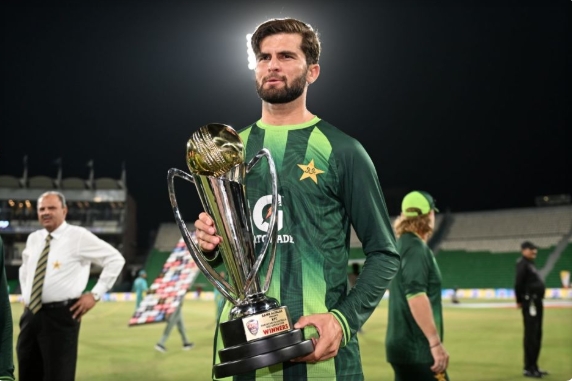
Pakistan is perhaps more accustomed to controversial switches of captaincy than any other side in cricket, and though Hesson does not get a final say in who leads the team, he sees shaping how the captaincy works as one of his central jobs. Late last year, Mohammad Rizwan was unceremoniously dumped as ODI captain via a brief press release announcing Shaheen as captain, with the PCB statement making no mention of thanks to the outgoing leader.

“We’re trying to work on having multiple leaders in a team,” he says. “The culture is more a telling culture rather than a cohesive developing culture. What tends to happen is you’re captain and then you’re not and then, you go from making every decision to not making any decisions. We’re trying to change that. When Agha was captain of the T20s he had a number of players that he could lean on and off the field, and we’ll do the same with Shaheen as well.”

The last overseas coach to have this kind of influence and longevity at the PCB was Mickey Arthur, though Hesson does point out a distinction between Arthur’s softer side and his own approach (“there are times when you can’t be a “softly, softly” coach,” he says flatly). With eyes turning to the ODI World Cup, which could well be Hesson’s last involvement with Pakistan, plans are already afoot.

Head coach Mike Hesson, selector Aaqib Javed and captain Salman Agha at Pakistan’s T20 World Cup squad announcement •Associated Press

Pakistan are already looking for a seam-bowling allrounder for that tournament, one to supplement, if not replace, Faheem Ashraf, who has struggled to fulfil the role in ODI cricket. Where one comes from is less clear, but that is part of the point of holding these camps and playing as much domestic cricket as Pakistan do, waiting, as Hesson says, for “somebody to put their hand up”.

He’s keen to work more on Pakistan’s mental fortitude, concerned that his side tend to fall into fatalistic patterns against sides that have dominated them in the recent past. But he also promises on-field changes; while the surfaces against Australia were painfully slow, Hesson says groundsmen will be told to produce strips to replicate what Pakistan might face in South Africa, where the bulk of the World Cup will be held.

The task ahead might look enormous in scale, but Hesson does not think it should necessarily temper expectations for that tournament. The ODI World Cup has not been a happy hunting ground for Pakistan this century; they have made just one semi-final in six editions, and have been knocked out in the first round in four of the last six tournaments.

“Like any team, we arrive at a World Cup and we’re trying to win the World Cup. We’re no different. But we know in order to do that, we have to play consistent cricket throughout to be able to qualify past the group stage. Every team I’ve been with and every team that’s been successful hasn’t ever thought too far ahead. You can’t win the World Cup before you play your first game. But our expectations are no different than anyone else.”

India drop Yastika Bhatia and pick G Kamalini for Asian Games

Shreyanka Patil has been named in the squad pending a fitness clearance

India Women have dropped wicketkeeper Yastika Bhatia and included teenage batter G Kamalini in their squad for the upcoming Asian Games, with Shreyanka Patil named subject to fitness clearance.

The selection panel backed in-form players from the WPL and domestic circuit as India prepare for a busy calendar including the Champions Trophy and the LA28 Olympic pathway.

Tags: Harmanpreet Kaur, Yastika Bhatia, India Women

Australia’s Perry has ‘no plans to retire’ from international cricket

Allrounder targets another World Cup cycle after semi-final heroics in Dubai

Ellyse Perry confirmed she has no immediate plans to retire, with eyes on the T20 World Cup final at Lord's and beyond.

Australia end their semi-final hoodoo to reassert world-beating credentials

Favourites march into final at Lord's with sights set on seventh T20 World Cup title

Australia were as clinical as expected in sweeping West Indies out of their path to the T20 World Cup final, as an eight-wicket victory removed their "semi-final curse".

Such an emphatic result at The Oval bolstered Australia's reputation as trophy favourites, but it was perhaps their relief at securing their place at Lord's on Sunday that was most telling.

It offered some insight into how hard it has been for a team so used to being world-beaters. They came in with a shaky recent record in the knockout phase of global tournaments, but demonstrated the work they've done to address that.

Australia were knocked out in the semi-finals of last year's 50-over World Cup by eventual champions India, and at the 2024 T20 World Cup by South Africa, who finished as runners-up to New Zealand. That meant that Australia entered this event without any silverware to defend for the first time since 2018.

"It's obviously been pretty frustrating, the way that we've ended our campaigns over the last couple of World Cups," said Ash Gardner, whose two wickets and 20-ball 35 in a half-century stand with Beth Mooney earned her Player of the Match. "But I guess, brush that off, get that curse away."

"I felt like this is the best cricket that we've played in a very long time. We're not relying on one or two people — in those big moments different people are standing up, which is amazing to be a part of."

Ellyse Perry and Mooney embrace after Australia beat West Indies
Ellyse Perry and Mooney embrace after Australia beat West Indies ICC/Getty Images

Mooney, whose unbeaten 61 off 36 balls took Australia past a meagre target of 126 with seven overs to spare, revealed that the team had spoken in the lead-up to this World Cup about managing themselves in big games and pressure moments.

"It's a much better way to be sitting in a press conference after a semi-final, that's for sure," Mooney said. "Even chasing 125, it's never over until it's over. Thankfully, we were able to do that both with the ball and the bat."

With Perry off, Gardner came in to back up her performance as the pick of Australia's enviable spin attack with four fours and a six, including the winning runs. She had taken 2 for 13 from her four overs, including a double-wicket maiden to remove Stafanie Taylor and Jahzara Claxton for no score.

"She batted beautifully against India at Lord's the other day," Mooney said. "She gets a lot of confidence from that and I think we saw that today with the ball, where she bowled beautifully and took wickets at critical times."

Tags: Ashleigh Gardner, Beth Mooney, Ellyse Perry, Australia Women, West Indies Women, ICC Women's T20 World Cup

Matthews: Investment gap, not talent gap, is holding West Indies back

"We're not supposed to beat Australia," West Indies captain said on the widening gulf between the two teams

It happened as everyone thought it would — West Indies were completely outplayed by Australia, a team they are "not supposed to beat," as Hayley Matthews put it, but not for lack of talent or will.

"Every single person in the dressing room trains really hard and wants to get better. A lot of the time we tend to be competing against teams like Australia who, realistically based on systems and opportunities, we're not supposed to beat," Matthews said.

"If we want to stop seeing a dependence on players like myself, it starts from the ground up — programmes in place for young girls to learn to play cricket and develop from a young age."

Matthews argued that the results on the field are making the funding discrepancy too stark to ignore, pointing to pathway systems in Australia that produce players like Phoebe Litchfield year after year.

Tags: Hayley Matthews, West Indies Women, Australia Women

Mooney, spinners take Australia to eighth T20 World Cup final

Chasing just 126, Mooney's unbeaten 61 off 36 balls eased Australia to victory against West Indies, with seven overs to spare

Australia 127 for 2 (Mooney 61*, Gardner 35*) beat West Indies 125 for 7 (Matthews 30, Dottin 26*, Gardner 2-13, Wareham 2-17, Molineux 2-30) by eight wickets

Beth Mooney's unbeaten half-century led Australia into the T20 World Cup final after a miserly display by Australia's spinners outclassed West Indies in a dramatic first semi-final at The Oval.

Chasing just 126, Mooney's unbeaten 61 off 36 balls eased Australia to victory with a massive seven overs to spare. Ellyse Perry, the most in-form batter in the tournament, retired hurt with a quadricep issue.

Ashleigh Gardner put the squeeze on with 2 for 13 from four overs while legspinner Georgia Wareham and left-armer Sophie Molineux chimed in with two wickets apiece.

Mooney struck eight fours on her way to an eighth half-century at T20 World Cups, equalling Suzie Bates' record for the tournament. Gardner finished on 35 not out off 20.

Tags: Beth Mooney, Ashleigh Gardner, Australia Women, West Indies Women

‘A bit scary’ – Matthews on Dottin’s pre-match medical emergency

Dottin had to be taken off the field by her team-mates after the anthems, but she returned to bat at No. 8

Deandra Dottin came out to bat at No. 8 after a medical issue before the start of West Indies' innings during the T20 World Cup semi-final against Australia.

Dottin was assisted off the field by her team-mates shortly after the national anthems and was treated in the medical room for about 30 minutes before returning to bat.

"I think it was a bit scary," West Indies captain Hayley Matthews said. "She's obviously a massive part of the team. To see her almost passing out during the national anthems was a bit scary. But she was able to come back and also play — that speaks to her character."

Dottin's 26 off 16 helped West Indies post 125 for 7. Australia chased down the target with 42 balls remaining to reach their eighth T20 World Cup final.

Tags: Deandra Dottin, Hayley Matthews, West Indies Women

Khawaja: ‘I wanted to be the first one to talk about salary cap’

Australia opener opens up on domestic cricket economics and player representation

Usman Khawaja said he felt a responsibility to speak first on salary-cap discussions affecting domestic players and international scheduling.