Live Matches
1st ODI - England Tour of West Indies
🇯🇲 WI 189/6
🏴󠁧󠁢󠁥󠁮󠁧󠁿 ENG 253/9

West Indies need 65 runs in 68 balls

Day 2 - India Tour of Bangladesh
🇮🇳 IND 410/6
🇧🇩 BAN 68/3

Bangladesh trail by 342 runs

T20I - Pakistan Super League
🏏 LHR 156/4
🏏 KHI 182/7

Lahore need 27 runs in 22 balls

Roach proves the fire still crackles the West Indies

Latest entrant into the 300 Test wickets club carries on a rich West Indian tradition
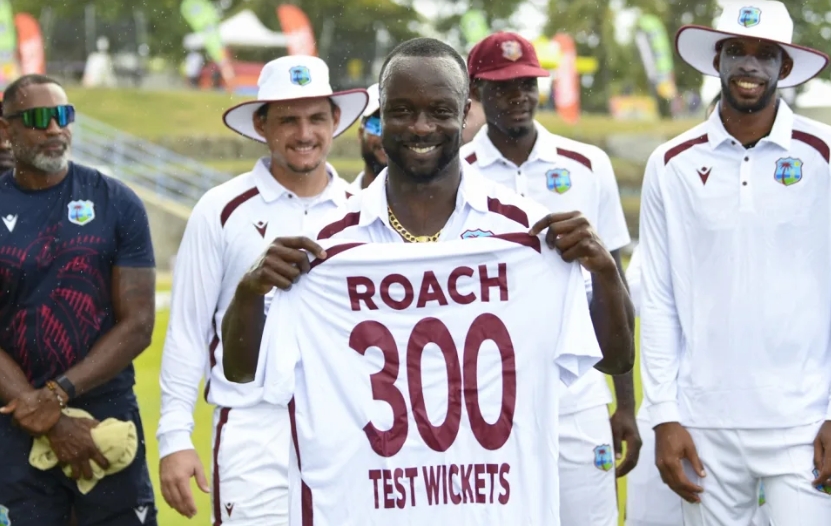
Kemar Roach is presented a West Indies Test shirt with the number 300 on it  •  AFP/Getty Images

Courtney Walsh, Curtly Ambrose, Malcolm Marshall, Joel Garner, Michael Holding, Andy Roberts. Here, in order of Test wickets taken, are West Indies‘ most successful fast bowlers. Cricket has very arguably never produced a clutch of athletes as spectacular as the men on this list, the monikers and mythology alone testament to the awe and fear they inspired in batters: Whispering Death, The Hitman, Horsemen of the Apocalypse, Fire in Babylon. But that list of names is incomplete. Add to it Kemar Roach, who in bowling West Indies to victory on Sunday claimed his 300th Test wicket, a peak that even some of the most revered bowlers from the region have not summitted. On the wickets front, Roach stands behind only Walsh, Ambrose and Marshall. But where Walsh and Ambrose had each other, and Marshall led some of the most elite attacks to ever descend upon a cricket field, Roach, often, has walked alone.

For so much of his career, Roach has felt like a whisper of something that used to be monumental. A fiercely glowing ember of a once-roaring fire. A late supernova in a fading Test galaxy. His huge, hooping inswingers to the right handers, which usually come from wide of the crease and swerve late as if plunging urgently into a gravity well have uprooted many stumps, and are his most conspicuous contribution to the genre of great West Indies fast bowling. But there has been plenty there besides – deliveries that can dart either way off the surface, the vicious bouncer with which he roughed up all-time great batters such as Jacques Kallis and Ricky Ponting,early in his career. A little more recently, he has become a master of the wobble seam, Sri Lanka’s batters prodding desperately outside off against him in the last Test.

The short ball is not as wicked as it once used to be, perhaps, Roach scaling down his pace as the years and recurring shoulder injuries have worn him. And yet his numbers in the last five years are better than what had come before. Even in the greatest years of West Indies’ fast bowling, terror was never their only currency, craft, patience, and bowling IQ as vital as pace and bounce. Though his name is rarely taken alongside theirs, Roach is far from out of place among the Caribbean’s greatest. His average of 26.83 is in the same vicinity of that of Walsh (24.44) and Roberts (25.61), but his strike rate of 51.81 is better than both and surpasses even that of Ambrose (54.57).

If there is a crutch, it is his dominance at home, 202 wickets in the Caribbean coming at an average of 22.04, against an average of 36.71 away from home. Still, his wickets have hardly been cheap, more than half of them batters from the top four (this is also testament to the swing he generates with the new ball). Then there’s also that other question: where would Roach’s figures be, had he had team-mates of the kind of quality the greats of the 80s and 90s built their records alongside? Batters who played in that era speak of a relentlessness to the menace of a West Indies attack, and there were strains of this in the most-recent Test – Roach, Alzarri Joseph, Shamar Joseph, and Jayden Seales bringing Sri Lanka’s top order down together. But for many of his 89 Tests, Roach has been by a distance West Indies’ primary threat. When opposition batters have come up against West Indies, they have tended to plan mainly for him.
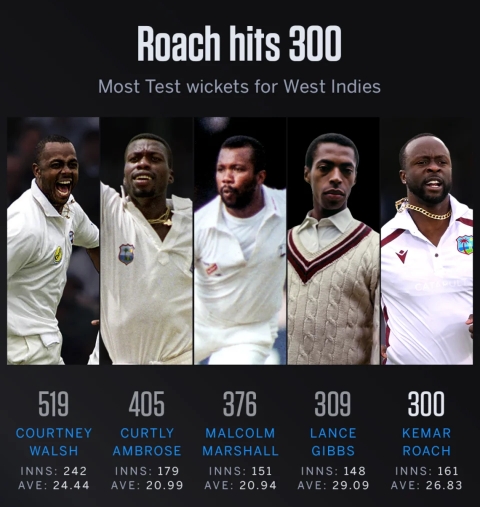
Roach 300 • cricbuzz

The 300 wickets have been won in a career that now stretches 17 years, but never has Roach’s cricket felt attritional. He is less likely to dive into verbals now than he used to, perhaps, but the intensity is as it ever was, the glaring at batters who have played-and-missed still severe, that thick gold chain still bouncing on his chest as he storms in, his skillset so broad and varied now that even on the tougher days, there is a range of plans he can rifle through. His pace has dipped, but Roach remains a forbidding figure at 38.

West Indies still produce quicks of high quality of course, but whether there will be another 300-wicket bowler from the region, there will be serious doubts. Primarily, this has to do with Test cricket’s economics – India, England and Australia still growing their appetite for the longest format, while in places such as the West Indies increasingly become a Test cricket backwater. Only small crowds were at the venue in North Sound to witness West Indies’ innings victory over Sri Lanka, even on the weekend days.

Roach’s 300th wicket – a heat-seeking missile that crashed into Asitha Fernando’s stumps – raised a standing ovation in the Antigua ground, but barely a stand was packed with spectators. This is the first West Indies bowler to this mark in almost 30 years – Ambrose having got there most recently, in 1997. Such heroic feats of Test bowling would, in another life, have raised tens of thousands to their feet at the venue. No longer. At the administrative level, Test cricket has no serious plan to combat this contraction of its breadth – a direction Cricket West Indies’ own administrators have been vocal about reversing, with little luck.

If Test cricket is going to go bust here, we must treasure what Roach has given all the more. He has carved out a place of his own in the halls of the Caribbean’s best. It is in his career that we have heard the clearest echo of West Indies’ incomparable boom years.
Pakistan lurch from one mistake to another, again

Pakistan’s win over Netherlands was their first in eight games at the T20 World Cup

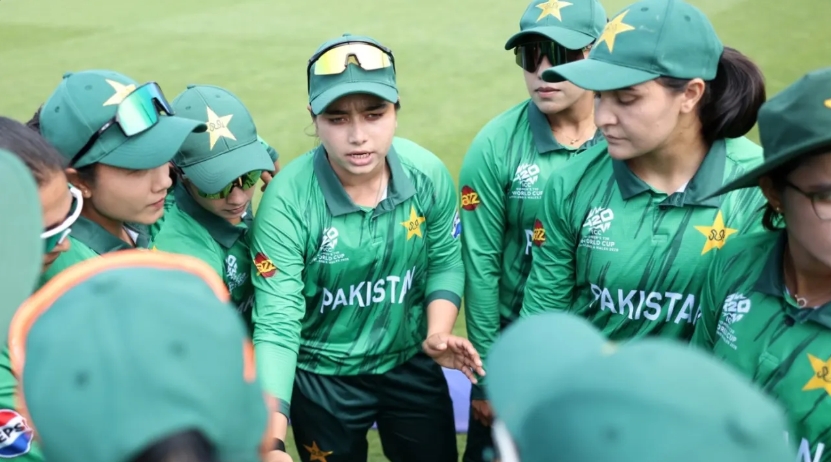
Pakistan had another World Cup to forget  •  ICC/Getty Images

That Pakistan’s T20 World Cup campaign is over well before the knockout stage is hardly a surprise; Pakistan have never made it that far in a women’s ICC event. It is barely an indictment, either; Pakistan were placed in the significantly harder group at this tournament. With three legitimate title contenders in Australia, India and South Africa in a group of six out of which only two were going to qualify, they were never in realistic contention for a semi-final berth. Pakistan are at a very different stage in their journey.

Pakistan’s win over Netherlands – a battle for the wooden spoon they should not be contesting – was their first in eight games at the T20 World Cup. Since a win over West Indies in 2020, it was just their third T20 World Cup victory in 15 matches, the other two coming against Sri Lanka and Ireland. In the last five editions, they have won one match apiece, finishing bottom but one in their group each time. The only sides to do worse in their groups in each edition were Ireland, Thailand, Ireland, Sri Lanka and Netherlands respectively.

There is even less encouragement to be gleaned from the Women’s ODI World Cup; they were the only side to finish winless at last year’s edition, duly propping up the table, something they have done in each of the last four editions in a run stretching back to 2013. Since 2010, Pakistan have lost 21 of 22 matches at the ODI World Cup.

For it to count as a journey, though, there has to be some evidence of forward locomotion. The Pakistan side appears parked somewhere along the side of the road, possibly out of fuel, occasionally chugging into gear, and then heading off in the wrong direction. Pakistan women’s cricket’s long-suffering supporters do not follow the team in search for glory so much as the satisfaction of seeing what has the buddings of an exciting team beginning to realise its potential. And it is that squandering of promise that will make this campaign so unforgivable.

Supporters of this side may have tolerated a defeat-laden campaign, but Pakistan appeared intent on box-ticking all the mistakes that everyone at the time knew were mistakes, and then made them anyway. They failed in precisely the way any discerning follower feared they might. Some of those were selectorial. Iram Javed, with a career batting average of 10.06 and a strike rate in the low 80s over a 60-match T20I career, was picked as a specialist batter, and finished with 36 runs in four games.

Aliya Riaz‘s inclusion was similarly criticised the moment the squads were announced, and is understood to have had a destablising role within the group, and an ineffectual one on the ground. She contributed 35 in her four outings, and was responsible for at least three dropped catches. Diana Baig, too, was left out for the best part of the campaign, replaced by Tasmia Rubab, who conceded 41 and 40 in her two outings in defeats against India and Bangladesh. The latter was a particularly ignominious loss that illustrated how deep Pakistan’s confidence had sunk, stumbling from 70 for 2 in 11 overs to 84 for 8.

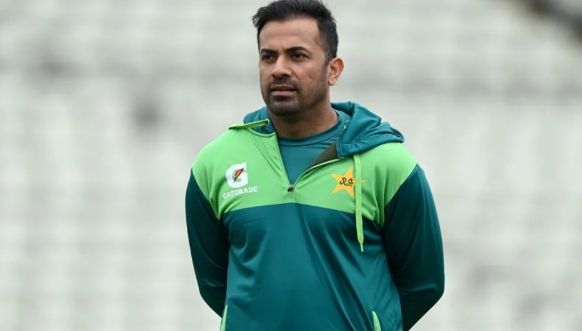
Bestraddling it all is Wahab Riaz, a central figure in this environment. Since he ended his playing career, Wahab has taken on a number of high-profile positions, without it ever being especially clear why he’d earned his current role or learned enough from it to be valuable to the one he was moving on to. In 2023, he was appointed advisor to then Punjab chief minister Mohsin Naqvi – now PCB chairman – for “sports and youth affairs” before being appointed the chief selector for the men’s side later in the year.

Wahab Riaz’s role as head coach might come under scrutiny • Getty Images

His most famous moment in that role was a public rebuke of Haris Rauf for ostensibly refusing to make himself available for Pakistan’s Test tour of Australia. For that, Rauf’s central contract was ripped up a few weeks later, only for Naqvi, now in situ at the PCB, to reinstate it. Wahab would shortly thereafter be demoted from that role before being dismissed from the selection committee altogether.

Thereafter he began to be channelled into the women’s game, where he recently served as the team mentor before being upgraded to head coach. It is unclear if this campaigns spells the end of his involvement with the women’s side.

It is worth remembering that, until not long ago, there was cautious optimism about the women’s side, particularly in T20 cricket. From 2014 to 2020, Pakistan won six of their 17 T20 World Cup matches, with the 2010s bringing wins over India, Sri Lanka, Bangladesh and West Indies. In September 2023, Pakistan whitewashed South Africa 3-0 in Karachi, and followed it up with a T20I series win over New Zealand away; they remain, to date, the only Asian side to have won a T20I series in that country. It was around that time that Fatima Sana began to come into her own; she is currently among the game’s best allrounders, and arguably at the peak of her powers.

Those powers, though, may end up being best expressed on the franchise circuit. Sana has already been signed up to the Hundred, and with the malaise the national team is in, it appears unlikely the PCB will be able to muster the effort needed to turn the ship around in her prime. The next T20 Women’s World Cup is scheduled to be held in Pakistan, and should have been a moment to build towards to showcase the best of the country’s women’s side to a country that still hasn’t fully bought into the team.

But on current trends, it might just be another event that happens and moves on from Pakistan without leaving any cultural footprint. The apparent lack of administrative interest in women’s cricket at the moment, or any public concern for its alarming slide, makes it far from a guarantee that this World Cup exit, like so many that preceded it, represents anything other than a miserable footnote from which there will always be a distraction to move onto.

Australia hint Ellyse Perry could play final even if not fully fit

The allrounder retired hurt in the semi-final chase against West Indies with “minor quad awareness”

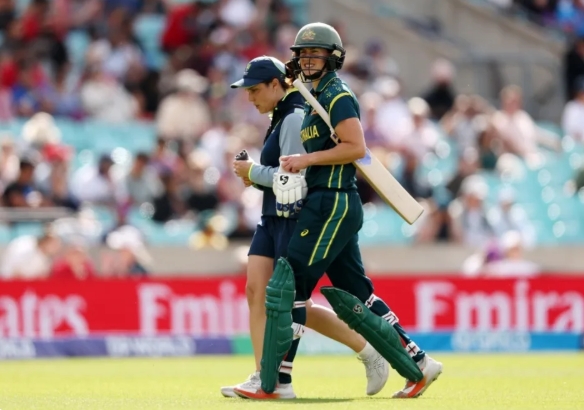
Head coach Shelley Nitschke has hinted that Australia may be willing to play Ellyse Perry short of full fitness with a T20 World Cup title at stake on Sunday at Lord’s.

Perry retired hurt in the semi-final chase against West Indies at The Oval in what was described as a precautionary move due to “minor quad awareness.” Speaking to reporters on Thursday, Nitschke said there was no definitive update on Perry as the team had not trained since their last game but there was confidence she would be ready to go, adding that a World Cup final did bring a different dynamic to any decision.

“Yeah, potentially,” Nitschke said of Perry playing short of a full recovery. “I think there’s still certain things that she wants to be able to do as well, [to] be able to still contribute to the team and hold her own, whether that’s in the field or running between the wickets. But there is that element of, this is a World Cup final, so what’s our tolerance there? So certainly a slightly different lens than perhaps some other times.”

Perry, who was forced to miss the 2020 T20 World Cup final at the MCG after badly injuring her hamstring, is Australia’s leading run-scorer at this tournament with 185 runs at 46.25 and a strike rate of 135.03, including half-centuries against Pakistan and India – the latter steering an impressive chase from a tricky 68 for 3.

That game against India at Lord’s was the only time since the early stages of the opening clash with South Africa when Australia have really been challenged on their run to the final where they will face either England or South Africa again.

Nitschke has been delighted with the varying contributions throughout the squad to reach this point. Seven half-centuries have come from four batters alongside Georgia Wareham having a strike-rate of 182.22. The defensive qualities of the bowling unit have stood out, including from 20-year-old left-arm Lucy Hamilton who, despite being wicketless across 11 overs, has conceded just 4.45 runs per over.

“She [Hamilton] has been super impressive,” Nitschke said. “I think to come into that game against India and bowl [in the] powerplay, and we know the powerplay is a big stage of the game for them and they come pretty hard, but to be able to have the composure and bowl like she did was excellent. And then again in the semi, she’s got a pretty level head. I know she hasn’t taken the wickets she would have liked and deserved, but she’s created a couple of opportunities though, which has been really important and excellent for her.”

Ellyse Perry retired hurt during the semi-final chase against West Indies • ICC/Getty Images

Australia will have a big selection call to make for the final over whether to recall legspinner Alana King, who has not played the last two matches since Phoebe Litchfield recovered from injury, or maintain the same balance of attack.

It will be the first World Cup final of either format that Australia have featured in since 2023, meaning for some of the squad it will be their first experience of such an occasion – including Litchfield and Georgia Voll at the top of the order – and Nitschke acknowledged there was a balance to strike.

“I think it’s just about instilling that confidence in them that, you know, at the end of the day we’ve got to play one more game of cricket and that we’ve all been playing really well,” she said.

“So making it as normal as we can but making sure they also do, I guess, enjoy the occasion. Not getting too overawed by that, too, I think is important. But I like to think that if we can keep all our processes pretty consistent then it ensures that it is just another game, but sure it’s a big one. You can’t hide from that but just embrace it, enjoy it and back themselves.”

Sai Sudharsan century, Padikkal 94* put India A in command

Arachchige’s 127 led Sri Lanka A to 366, as Gurnoor and Jain got four wickets each for the visitors

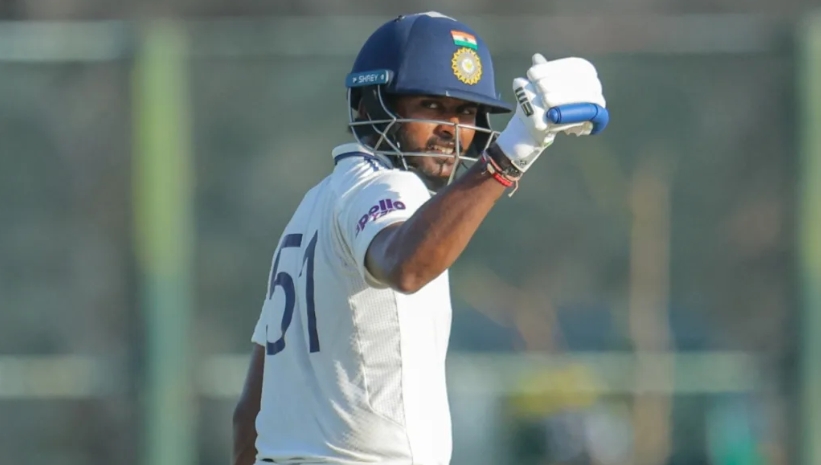
B Sai Sudharsan acknowledges his century  •  Sri Lanka Cricket

India A 247 for 1 (Sai Sudharsan 104*, Padikkal 94*) trail Sri Lanka A 366 (Arachchige 127, Gurnoor 4-77, Jain 4-92) by 119 runs

B Sai Sudharsan had retired hurt during the first four-day fixture between Sri Lanka A and India A, but returned to action with an unbeaten century on day two of the second game at Galle. He was unbeaten on 104 at stumps, and giving him company was Devdutt Padikkal, who was 94 not out.

Sai Sudharsan and Padikkal’s partnership was unbroken on 181 for the second wicket, leaving India A only another 119 runs behind Sri Lanka A’s first-innings total of 366.

India A had started positively, with Sai Sudharsan and his opening partner Aman Mokhade bringing up their half-century stand off just 63 balls. While Sai Sudharsan had hit five boundaries until that stage, Mokhade had hit four. But offspinner Keshara Nuwantha broke the stand at 66 when he had Mokhade caught for 38.

Despite the loss, Sai Sudharsan and Padikkal kept India A going by steadily chipping into the hosts’ total. The runs kept coming at a steady pace for the visitors, who had, earlier in the day, bagged the last five Sri Lanka A wickets for just 61 runs.

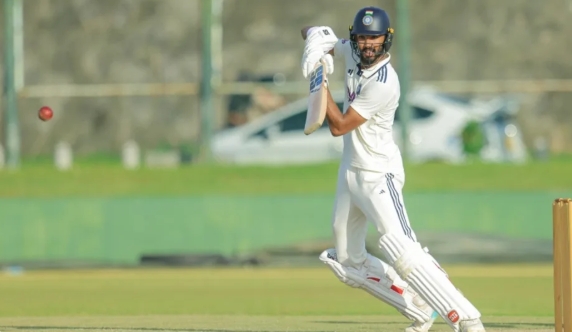
Devdutt Padikkal punches off the back foot • Sri Lanka Cricket

Sri Lanka A had resumed on 288 for 5, with their captain Sahan Arachchige unbeaten on 83. He hit the second ball of the day, bowled by Gurnoor Brar, for four, but the fast bowler broke the sixth-wicket partnership on 35 when he had Chamika Gunasekara caught behind for 13 in the 92nd over. Arachchige, meanwhile, reached his century in the 94th over. He kept Sri Lanka A ticking in a steady eighth-wicket stand with Dilum Sudeera after Saransh Jain got Nuwantha for 1.

Sudeera contributed a handy 20 before Jain had him lbw in the 109th over, before Grunoor wrapped up the innings in the next over. He dismissed Arachchige for 127 and last batter Asanka Manoj two balls later to bowl Sri Lanka A out in 110 overs. That was lunch, and both Gurnoor and Jain finished with four wickets each. India A then carried the momentum into the next two sessions of the day.

Let Vaibhav Sooryavanshi be a boy before we make him a legend

Decades ago, tennis earned a bad name for breaking its children. Cricket might be about to repeat that error

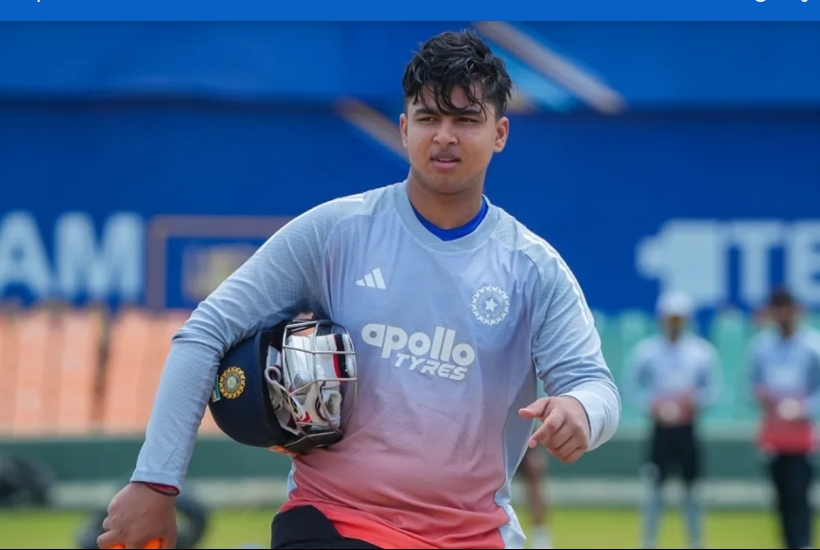
Fifteen at a hundred miles an hour: Sooryavanshi’s life is not proceeding at the normal pace at which children grow up  •  SLC

Jennifer Capriati was 13 when she appeared on the cover of Sports Illustrated. By 16 she had an Olympic gold medal. By 18 she was in rehabilitation and had spoken to the New York Times about wanting to take her own life.

Andrea Jaeger was the world No. 2 at 16 and retired at 21 with a destroyed shoulder, carrying for decades the memory of being mistreated in a professional environment where no one seemed clearly responsible for protecting her.

Tracy Austin won the US Open at 16 and was finished as a major force before she could legally drink.

These are not footnotes in sporting history. They are warnings.

They are also the reason the Women’s Tennis Association (WTA) in 1994 introduced what became known as the Capriati Rules, age-based guidelines that, among other things, limited how much professional tennis a player under the age of 18 could play in a calendar year. Tennis waited for its catastrophe before it built its protections. Cricket may be living through the opening chapter of its own version of the same story.

What we are seeing in Vaibhav Sooryavanshi is not simply a talented boy playing above his age. It is something cricket has genuinely never had to deal with before – namely, a child placed at the centre of one of the most commercially powerful, globally visible and socially amplified sporting environments ever created: Indian cricket and the IPL. Cricket has seen prodigies. It has seen young players arrive early and carry labels they did not ask for. But it has not seen this precise combination before, of innocence, extraordinary gift, and a social media world that has abolished nearly every distance between a child and the opinions of hundreds of millions. Sooryavanshi is 15, living a life that is not proceeding at the ordinary pace of growing up. This needs careful consideration before it is too late.

T20 cricket rewards what young players bring naturally – fearlessness, aggression, and a mind uncomplicated by doubt. Test cricket is no longer their first choice; the rewards on offer there are significantly less. Some of them may be ready for the cricket. That does not mean they are ready for everything around the cricket. Sooryavanshi is the first sign of what’s coming.

I have a small personal sense of what an early label feels like. I broke Graeme Pollock‘s record as the youngest South African to score a first-class century at 16 and was immediately called the new Graeme Pollock. In hindsight, that accomplishment and the comparison that followed, did far more harm than good. It gave other people a story about me before I had been given enough time to understand my own.

In my view he should be at home preparing for his exams, playing gully cricket with his mates, and being a young boy while he still has the chance. That does not mean ignoring his talent. It means understanding that the talent will only be truly served if the person carrying it is allowed to grow whole

Luckily in that context, I played in an isolated South Africa, in an era when the wider cricket world knew little of us and when the noise between a young cricketer and public opinion had natural limits, even at home. The newspaper came the next morning. The radio discussion ended. There were gaps in which to breathe, to be unknown, to have a poor day. Today’s newspaper was tomorrow’s fish-and-chips paper, they used to say.

Sooryavanshi has no such gaps.

Sachin Tendulkar debuted at 16 against Wasim Akram, Waqar Younis and Imran Khan, and the scrutiny on him was enormous by the standards of that time. But it still arrived through journalism. It was mediated by editors, slowed by the natural pace of the media as it was then, and filtered by people who carried at least some professional responsibility.

That mediation no longer exists. Every innings, every press conference, every gesture, every failure, every heated on-field moment – and Sooryavanshi has already been part of such a moment – can be clipped, uploaded and judged within minutes by people who answer to no one.

The crowd used to leave the stadium at the end of the day. Now it never really leaves at all.

This brings us to the heart of the matter. Developmental psychology teaches us that childhood is where a person builds a sense of who they are, independent of performance and independent of what other people need them to be. Child psychoanalyst Erik Erikson called it identity formation. He also had a word for what can happen when that process is interrupted too early and a single role is assigned before the young person has had the chance to explore anything else. He called it foreclosure – a door closed before the person inside has had the chance to look around the room.

Sooryavanshi’s door has closed very early. His identity has been decided for him by his own gift, the most involuntary thing a person can possess, before he has had much chance to explore alternatives. That is the quiet sadness beneath all the celebration.

Greatness at 15 does not wait politely while the person catches up. It sets a frame. It fixes an image in the public mind. Everything that follows, the mistakes, the growing up, the confusion, the disappointment, the ordinary human work of becoming yourself, has to happen inside that frame. The boy becomes the legend before he has had the chance simply to become a man.

That is why we need to go softly with him. Not because he is fragile in the sense in which people sometimes use that word, dismissively, but because he is young. Because the bat speed may look adult, the courage may look adult, the market value may look adult, but the person carrying all of it is still 15.

Becoming a household name when she was barely in her teens nearly wrecked Jennifer Capriati’s life • Clive Brunskill/Getty Images

History should make us humble here. The WTA did not respond to its broken child stars by asking people to care more. It passed rules that worked regardless of how much anyone cared, because it had learned painfully, and too late, that goodwill and commercial interest cannot be left to find their own balance where children are concerned.

Cricket has not built those safeguards yet. It has no clear structural mechanism, independent of its commercial interests, whose explicit mandate is to protect the long-term well-being of a minor inside the professional game.

Everyone will say they are doing what is best for Sooryavanshi. Most will mean it. His family will love him and travel with him. His coaches will care. His franchise will speak of development. The BCCI will tell us they have a plan. But none of that is the same as protection. Care matters but it’s not enough.

Cricket does not need to wait for its own Capriati moment. The evidence already exists. The question is whether the game will act while there is still time to act wisely, or whether it will one day find itself passing a set of protections we come to call the Sooryavanshi Rules, because it waited until a name was needed.

In my view – and I say this with care rather than judgement – he should be at home preparing for his exams, playing gully cricket with his mates, and being a young boy while he still has the chance. That does not mean ignoring his talent. It means understanding that the talent will only be truly served if the person carrying it is allowed to grow whole and he is physically allowed to develop without the risk of premature injuries.

What we should hope for is that he retires at 40 and not washed up at 25. That’s another 25 years of him! We should hope that his talent becomes something he inhabits on his own terms, rather than something that inhabits him. We should hope there are still parts of his life in which he can be ordinary and unobserved, in which he can fail quietly, laugh freely, finish his studies, play without a camera nearby, and digest all of what’s happening, in the quietness of his home and among his family and friends. The best chance of that happening is in the next three years. They should be about him, not cricket. Is that too much to ask?

Sooryavanshi’s talent is a remarkable thing. What would be more remarkable is a complete life on the other side of it and a man who carried the gift all the way through and arrived whole at the far end. The long game is about when the batting is finished, and that person is being built right now, whether cricket is paying attention or not. And there is only one chance at it.

It is my sincere hope that he will turn to Tendulkar for guidance. He could not be more lucky than to have a mentor in a fellow Indian cricketer who has been through it all and seen it all, and who will have his best interests at heart.

Bethell in line to open as England name ODI squad for India series

Batter’s promotion could foreshadow a future elevation in Test cricket as well

Jacob Bethell could be Ben Duckett’s fifth opening partner in ODIs  •  ECB via Getty Images

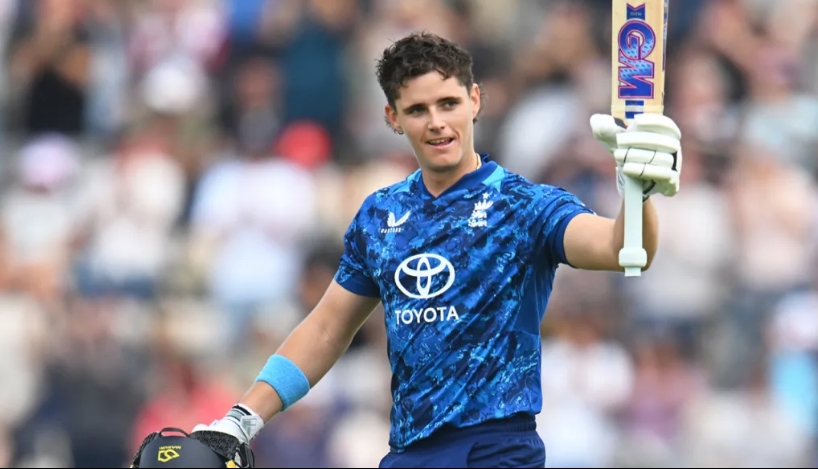
Jacob Bethell is set to open the batting in England’s ODI series against India, in a move that could foreshadow a future elevation in Test cricket. They have included two uncapped players in their squad for the three-match series later this month in James Coles and Josh Tongue, with Gus Atkinson and Saqib Mahmood both recalled.

Ben Duckett has had four different opening partners in 50-over cricket since the start of last year. Phil Salt was dropped after the Champions Trophy, and his replacement Jamie Smith was discarded after averaging 26.11 in nine innings. In their most recent series against Sri Lanka in January, Zak Crawley made 6 in his only innings, and Rehan Ahmed was used as a pinch-hitter.

Cricinfo has learned that Bethell is in line to become Duckett’s fifth opening partner in that timeframe against India, a promotion from his recent role at No. 4. He has previously opened the batting in 50-over cricket for both England Under-19s and England Lions, and could potentially shuffle up from his role at No. 3 in Test cricket in the future.

England’s rejigged ODI batting line-up is expected to feature Joe Root, captain Harry Brook and wicketkeeper Jos Buttler from No. 3-5, while Will Jacks will continue to bat in the middle order after his success at the T20 World Cup. There is then a decision to make around the balance of the side, with a choice between an extra batter in Tom Banton or an additional bowling option.

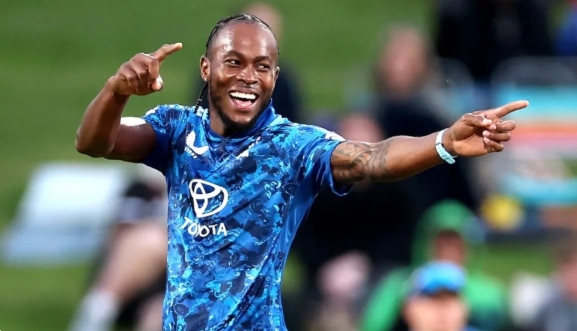
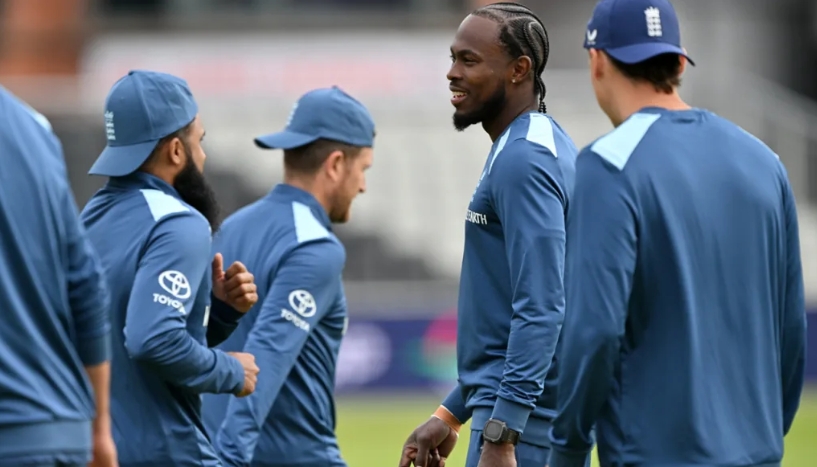
Jofra Archer will return to ODI cricket after he was rested for January’s series win in Sri Lanka, while Atkinson’s and Tongue’s inclusions mean that England’s seam attack looks increasingly similar to the one they used in their recent Test series against New Zealand. Mahmood is also in line for a return after missing England’s ODIs this winter with a knee injury.

Jofra Archer is back in ODI colours for the first time since November • Getty Images

Brydon Carse (hand) and Jamie Overton (quad) are both unavailable after injuries, though Carse trained with England before their washed-out first T20I in Durham on Wednesday night. Liam Dawson is another notable inclusion, signalling that he will come into contention for the 2027 World Cup in South Africa with the uncapped Coles offering a similar skillset.

Players named in England’s squad are likely to be ruled out of the knockout stages of the T20 Blast, though some players may be released to play for their counties if they are not required.

India have named a strong squad for the 50-over leg of the tour, with Rohit Sharma, Jasprit Bumrah and Virat Kohli (fitness permitting) all included. The three-match series starts at Edgbaston on July 14, before moving to Cardiff (July 16) and Lord’s (July 19).

England ODI squad: Rehan Ahmed, Jofra Archer, Gus Atkinson, Tom Banton, Jacob Bethell, Harry Brook (captain), Jos Buttler, James Coles, Sam Curran, Liam Dawson, Ben Duckett, Will Jacks, Saqib Mahmood, Adil Rashid, Joe Root, Josh Tongue.

Changes from SL tour:

In: Archer, Atkinson, Coles, Mahmood, Tongue
Out: Brydon Carse (hand), Zak Crawley (dropped), Jamie Overton (quad), Luke Wood (dropped).

Sam Curran stays calm in the spotlight as England ‘noise’ grows

Allrounder could come into contention to fill Ben Stokes’ boots, as well as a T20 captaincy option

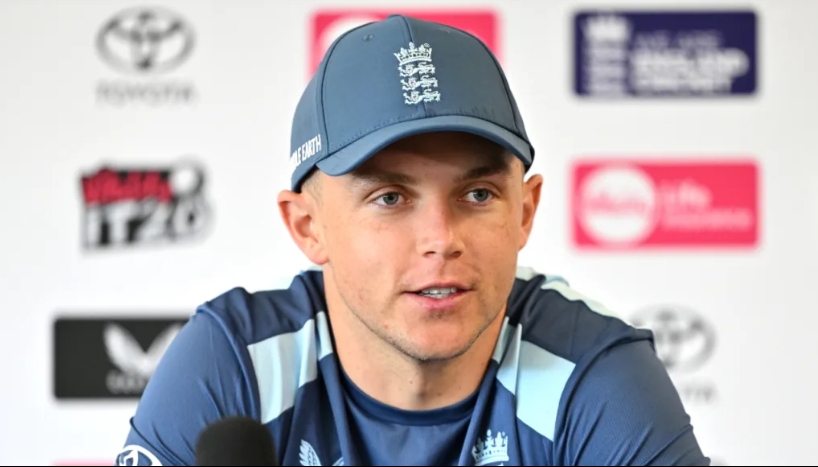
Sam Curran speaks to the media at Old Trafford  •  PA Images via Getty Images

Sport works in strange ways. This has been a very good week for Sam Curran‘s standing as an international cricketer, for reasons that have very little to do with anything Curran himself has done. But there is an inevitable ripple effect when a player like Ben Stokes calls time on their England career, and Curran could benefit from Stokes’ absence in two distinct ways.

The first is a long-awaited Test return. It is nearly five years since Curran played his last Test match, with injuries and financial incentives dragging him towards the white-ball game. But when Brendon McCullum spoke this week about the scarcity of “seam-bowling allrounders who can bat in the top seven”, it was a reminder that Curran’s skillset is hugely valuable.

The second is slightly less direct, but just as plausible. Harry Brook is the favourite to replace Stokes as Test captain and whatever Brook says, England’s management have made clear that they consider leading across three formats to be unsustainable. Jos Buttler aside, Curran is the most experienced captain in England’s T20 squad and would be a strong candidate to take over in that format, leaving Brook to focus on Tests and ODIs.

It is a far cry from the situation 18 months ago, when Curran was not picked to play for England in any format, let alone all three. He wondered aloud if his face didn’t fit when he was overlooked for Test squads even when Stokes was injured, and that impression was only furthered when McCullum took over the white-ball sides and immediately sidelined him for the Champions Trophy.

Curran always maintained that he was confident of a recall, which duly arrived in September as a late replacement for the rested Ben Duckett. He immediately became indispensable in a set-up that was searching for balance: he has played 24 out of England’s 25 white-ball matches since his comeback, and has become Brook’s go-to T20 death bowler.

He was reluctant to talk himself up during his pre-match media duties in Manchester on Friday, but said that he would love the chance to return to Test cricket. “Of course,” Curran told the BBC. “Playing for England is amazing, and I’m a competitive guy. When I’ve got a ball or bat in my hand, I just try to do my best, so we’ll see what happens.

“There’s no doubt, with Ben Stokes retiring, there will be hype around it. He’s such a legend of the game, and someone who did so well. Whoever comes in eventually to take over his spot, there will be loads of stuff on it. At the same time, I’m sure whoever comes in will do their best and try to get the focus on them [rather] than Ben.”

Curran is not England’s only route to replacing Stokes in their Test team. At The Oval last month, they opted to pick an extra batter in Jordan Cox and relied on four frontline seamers plus Jacob Bethell and Joe Root’s spin; alternatively, they could look at Rehan Ahmed or James Coles as a possible spin-bowling No. 7, but seam-bowling allrounders are thin on the ground.

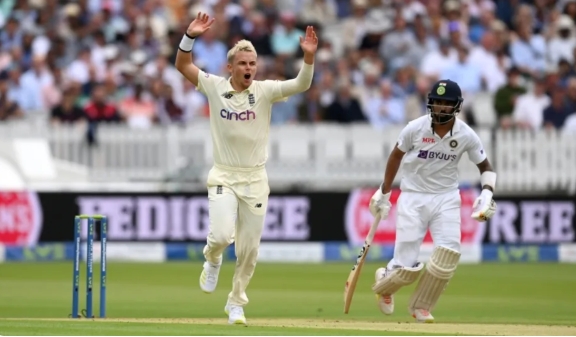
Curran’s last Test appearance came in 2021 • Getty Images

Curran has only played 14 first-class games in four-and-a-half seasons since he was dropped by England’s Test team, but the indication from them is that he has started to fulfil Alec Stewart’s prediction that his batting would eventually overtake his bowling. In that time, he has averaged 46.05 with the bat (including his first two first-class hundreds) versus 29.38 with the ball.

He said on Friday that he feels like “a different cricketer” to the one who played 24 Tests between 2018 and 2021, bursting onto the scene against India before his performances faded. “I was very raw back in those days,” Curran said. “It feels [like] a very long time ago, and I just feel a lot more experienced [now]… I’m not someone who wants to look too far ahead.”

Curran only returned to bowling fitness last month after missing the IPL with a groin injury, though his initial comeback as a specialist batter earned him an unexpected public rebuke from Rajasthan Royals coach Kumar Sangakkara. He declined an opportunity to set the record straight on that subject, but his fitness to fill a fourth-seamer role in Test cricket is not completely clear.

He has only bowled 13 competitive overs since his injury, three of them in Wednesday’s washed-out T20I series opener at Chester-le-Street. And he will not play another red-ball game before England’s Test series against Pakistan begins on August 19, with white-ball cricket – including the Hundred, where he will captain MI London – filling his diary.

“You never know until you play,” Curran said. “I’m just really excited to be back playing a full part bowling again. [It was] obviously a frustrating two-and-a-half months being injured. It was probably a nice time there – I always feel like I’m full-on – to sort my injury out, and a lot of rehab with the medical staff. I’m feeling good, and it’s a long summer ahead.”

Curran was similarly evasive on the prospect of taking over from Brook in either white-ball format, though has thrived as Surrey’s T20 captain. “I do enjoy it, but right now I’m just enjoying the set-up,” he said. “I just enjoy being back in the side; I obviously had time out of it, and it’s been great…. Everyone’s speculating, speculating; I think it’s pointless, in a way.”

It was hardly a rousing statement of candidacy, but Curran’s old Surrey team-mate Morne Morkel – now India’s bowling coach – provided an endorsement. “He’s always confident,” he said. “He’s a guy that in tough situations, he wants the ball, he wants to step up, he wants to make the play. That’s the X-factor that he brings… You need that character in your side.”

Curran made repeated references to the “noise” around the England team on Friday and reiterated his focus on the white-ball series at hand. But if he performs to potential over the next three weeks, then the noise around him specifically will only grow louder.

Archer back in the XI, Tongue to debut; India eye runs at Old Trafford

India bowling coach Morne Morkel hints Sooryavanshi will have to wait his turn

Jofra Archer has joined up with the T20I squad  •  PA Photos/Getty Images

Big picture: Let’s try that again

If Wednesday night’s washout was frustrating for both sides, it did at least ensure India would not be beaten for the third match in a row – something that has not happened to them in this format since 2021. After the surprise series loss in Ireland, which Shreyas Iyer termed “depressing”, India’s batters at least found some of their usual range up in Durham to put on 189 for 7 before the rain set in.

With their IPL-tuned hitting games, they could well be in for a lot more fun at Old Trafford, where England breached 300 against South Africa last year. Although India stuttered in the opening match, falling to 6 for 2 at the end of the second over, Abhishek Sharma continued his fine record against England (347 runs at a strike rate of 219.62) with his third 50-plus score in seven innings, helping to patch up the damage alongside Iyer, whose half-century was his first in T20Is since December 2023.

And despite the continuing woes of Sanju Samson – scores of 5, 0 and 1 in his last three innings – India’s management remains coy as to when and where they might finally unleash 15-year-old phenom Vaibhav Sooryavanshi on international cricket.

England, too, will be better for the run-out – not least the captain, Harry Brook, who has had three more days to attune himself to T20 again after the Tests against New Zealand. Saqib Mahmood was the standout performer, making an encouraging return post-knee surgery, but he is set to make way for the returning Jofra Archer, who was not considered for the first T20I after his involvement at Trent Bridge, as one of two changes to the bowling attack.

Form guide

India LLWWW (last five completed T20Is, most recent first)
England LWWWW

In the spotlight: Phil Salt and Sanju Samson

Old Trafford is Phil Salt‘s home ground but such is the nature of the schedule these days, and how it dovetails with international and franchise commitments, he hasn’t played there since September 2025. On that occasion, his unbeaten 141 off 60 balls was the centrepiece of England’s record-breaking 304 for 2 against South Africa. After a below-par T20 World Cup and an IPL affected by injury, he will be looking to channel that form once again.

Life comes at you fast, so the saying goes – and don’t India’s T20 World Cup winners know it. Suryakumar Yadav, captain of the side, was dropped entirely and now Sanju Samson, Player of the Tournament after his run of 97*, 89 and 89 at the pointy end, seems to be looking anxiously over his shoulder. Low scores are a fact of life in T20, when batters are compelled to keep playing their shots rather than grind out a path back into form. But with Sooryavanshi in the wings, Samson could do with a few.

Team news: Archer back, Sooryavanshi wait to continue?

England have again confirmed their XI in advance, with Archer and Josh Tongue coming in – the latter for a T20I debut – for Mahmood and Luke Wood. Salt is fit to play after jarring his shoulder while fielding on Wednesday.

England 1 Phil Salt, 2 Jos Buttler (wk), 3 Harry Brook (capt), 4 Jacob Bethell, 5 Tom Banton, 6 Sam Curran, 7 Will Jacks, 8 Liam Dawson, 9 Adil Rashid, 10 Jofra Archer, 11 Josh Tongue

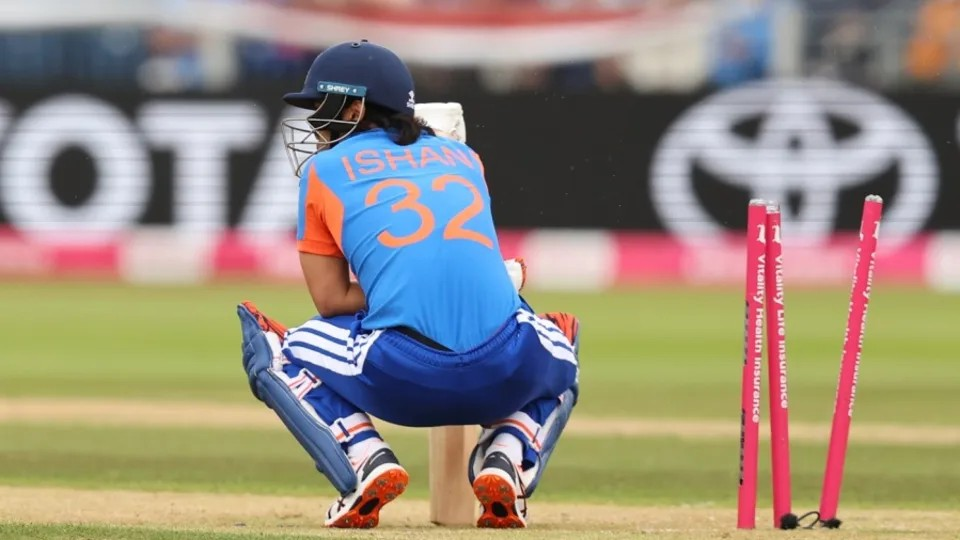
Ishan Kishan was run out for the second successive innings • Getty Images

Morne Morkel, India’s bowling coach, suggested they won’t “tinker too much” when asked the inevitable question about Sooryavanshi. India went with three spinners in the first game (although no one got a bowl) and could stick with that combination.

India (probable) 1 Sanju Samson, 2 Abhishek Sharma, 3 Ishan Kishan (wk), 4 Shreyas Iyer (capt), 5 Tilak Varma, 6 Shivam Dube, 7 Axar Patel, 8 Harshit Rana, 9 Arshdeep Singh, 10 Ravi Bishnoi, 11 Varun Chakravarthy

Pitch and conditions: turn, bounce… and runs

Old Trafford’s pitches have traditionally offered something for spinners and seamers, with the bounce benefiting both – but they can be good to bat on, too, as demonstrated by England putting up 304 for 2 last year (the first time 300 had been scored in a match between Full Members). The surface is a fresh one, despite the Women’s T20 World Cup recently being in town, with a little grass left on.

Stats and trivia

  • The washout at Chester-le-Street was India’s third no-result from three trips to the ground. Only England at the Brabourne Stadium in Mumbai have played more games at a venue without getting a positive result (four Tests, four draws).
  • Axar Patel is one appearance from equaling MS Dhoni on 98 as India’s fifth-most capped man in T20Is; he needs one more wicket to become the fourth Indian with 100 wickets in the format.
  • Adil Rashid, on 164 right now, needs two wickets to reach No. 2 on T20I wicket-takers’ list. Rashid Khan leads the table with 193.

Quotes

“It’d be a huge confidence-booster, a series win against the top team, the champions back-to-back. They’re obviously a great team… It’d be great if we can get a series win, just for England cricket in general.”
Sam Curran believes beating India would be a significant boost at a turbulent time for English cricket

“We just need to also respect the fact that we have the No. 1 batter in T20 cricket, Abhishek Sharma. Sanju [Samson] was the player of the World Cup, he had a great IPL. As a coaching staff, it’s only fair to show the faith and back your players.”
India bowling coach Morne Morkel hints that Sooryavanshi will have to wait his turn

Netravalkar, Owen bowl Washington Freedom to big win

They picked up three wickets apiece before Steven Smith steered them home in a 109-run chase

Saurabh Netravalkar struck twice in the 13th over on his way to a three-wicket haul  •  Sportzpics

Washington Freedom 110 for 4 (Smith 40*, Chapman 34, Narine 2-25) beat Los Angeles Knight Riders 108 (Powell 30, Netravalkar 3-16, Owen 3-19, Dwarshuis 2-12, Ian Holland 2-25) by six wickets

It was an abject batting display from Los Angeles Knight Riders, not for the first time this season, and while Washington Freedom had their own struggles with the bat, they were only chasing 109, and got there with 17 balls to spare in their MLC 2026 game on Wednesday.

MLC action shifted from Oakland to Pomona after a two-day gap, and the first glimpse of the new venue suggested tough times for batters over the next few days – Pomona is hosting seven games.

It has started with a game where 218 runs were scored for the loss of 14 wickets in 37.1 overs, with Knight Riders rolled over for 108 by the combination of Saurabh Netravalkar, Ben Dwarshuis, Mitchell Owen and Ian Holland. Up top, Colin Munro scored 25 but took 31 balls to get them – after scoring 33 in 36 balls in Knight Riders’ previous game – and Matthew Tromp scored 21 in 20 from No. 3. All they had after the powerplay was 40 for 1.

And, if anything, it was poorer after that, with the scoreboard reading 59 for 3 after ten overs. The wickets kept falling, Netravalkar sending back Jason Holder and Andre Russell in the 13th to effectively scuttle Knight Riders’ hopes of getting somewhere safe. There was a bit of a scrap from Rovman Powell, who hit two fours and two sixes in his 19-ball 30, but absolutely nothing around him.

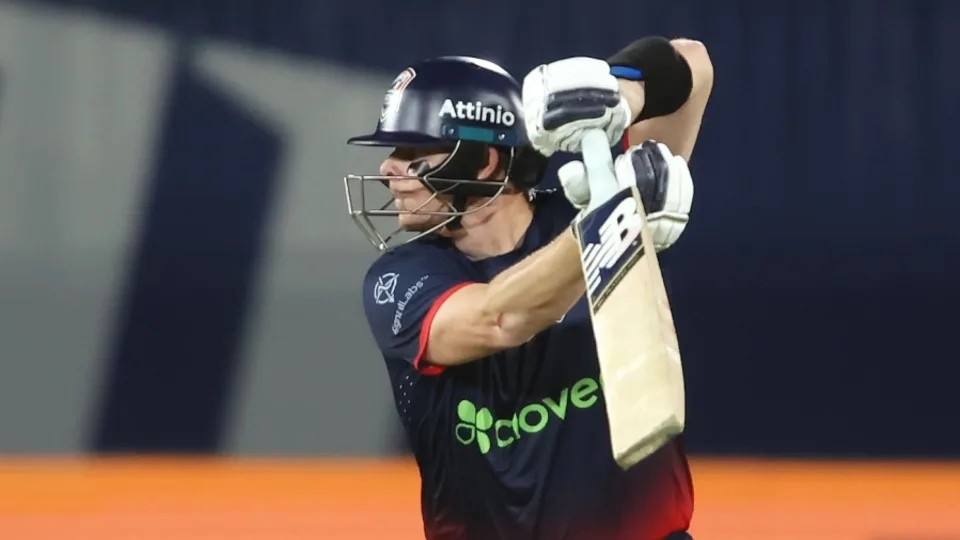
The small target meant Steven Smith was in no hurry • Sportzpics

Netravalkar and Owen, who also had a double-wicket over, picked up three wickets each, while Dwarshuis and Holland had two apiece.

It was a good opportunity for Steven Smith to find some form, and he might have done a little bit of that, scoring an unbeaten 40 in 44 balls to make sure Freedom got home. The slowness of his innings didn’t do much for his strike rate, though, which is still 106.83 after six innings.

But he had a job to do after Sunil Narine sent back Owen and Andries Gous inside three overs to give Knight Riders a bit of hope, and Mark Chapman was a good partner to help Smith along. The two added 62 runs for the third wicket, taking 54 balls to get them, and took Freedom to within sight of the target before Chapman fell for a 30-ball 34.

Nikhil Chaudhary fell too for a 12-ball 15, before Smith and Lahiru Milantha finished the job.

The win lifted Freedom to fourth place on the table – level on points with the top three of San Francisco Unicorns, Seattle Orcas and Texas Super Kings but well behind on net run rate – while Knight Riders slipped to the bottom.

Nat Sciver-Brunt, Heather Knight put England in final

They defended 170 with ease against South Africa and will now face Australia in the final at Lord’s on Sunday

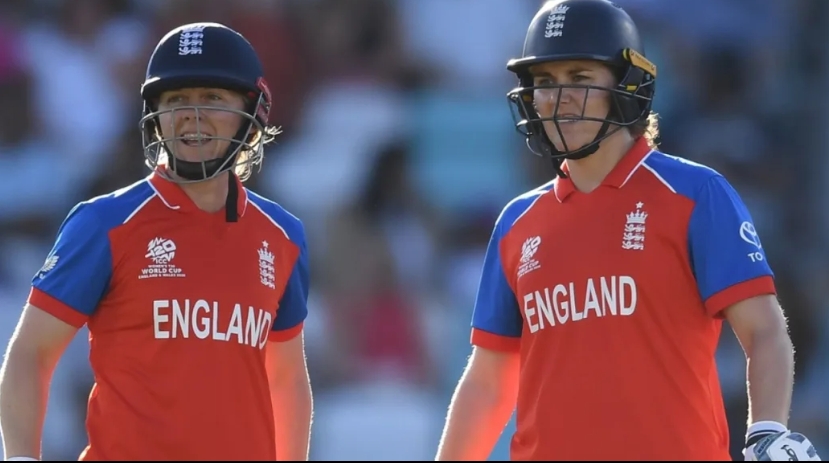
Heather Knight and Nat Sciver-Brunt put up a century stand  •  ICC via Getty Images

England 169 for 5 (Sciver-Brunt 75, Knight 58) beat South Africa 129 for 8 (Brits 51, Bell 2-28, Dean 2-31) by 40 runs

England stormed into the final of their home T20 World Cup with a comprehensive victory over South Africa built on blistering half-centuries by Nat Sciver-Brunt, returning from injury, and Heather Knight.

The England captains present and past combined for a 133-run partnership for the fourth wicket off 90 balls to rescue their side from a perilous 23 for 3 and set up a 40-run win. It was the highest partnership for any wicket in a Women’s T20 World Cup semi-final and the second-highest at this edition of the tournament, earning them the right to face Australia in Sunday’s title decider at Lord’s.

Sciver-Brunt, back in the side after missing three games with a recurrence of a calf injury, smashed 75 off 47, and Knight 58 off 47, before an all-round effort by England’s bowlers held South Africa to 129 for 8 in reply to 169 for 5, vanquishing the hosts’ poor record in global semi-finals between them in recent times.

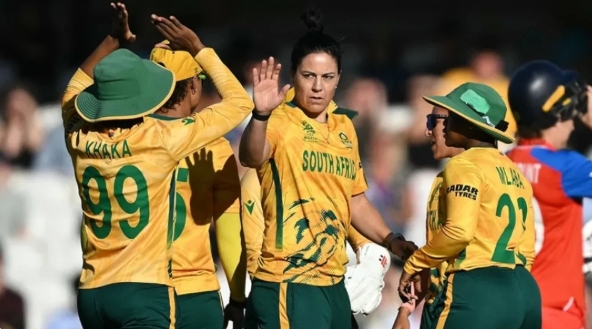
An early onslaught from Shabnim Ismail and Marizanne Kapp had England in trouble at the end of the powerplay, the hosts’ equal worst for that phase of play in the tournament alongside their second game, against Ireland. Kapp conceded just one boundary on her way to 1 for 16 off her four overs and Ismail ended with 2 for 31.

Among the early wickets was the in-form opener, Danni Wyatt-Hodge, who managed just 12 but England showed the enviable batting depth which has finally gelled this summer to emerge on top after losing to South Africa in the semi-final of last year’s 50-over World Cup and the 2023 T20 edition.

Ismail, Kapp win opening gambit

Ismail became the first woman with 50 wickets at T20 Women’s World Cups when she struck first ball to remove England opener Amy Jones. Ismail started in the second over of the match with a short ball which reared from outside off stump as Jones leaned back to cut and sent a leading edge straight to Annerie Dercksen at cover point. Since her half-century against Sri Lanka on the opening night of the tournament, Jones has had a wretched run with the bat, scoring 36 runs across her five subsequent innings with a highest score of 17.

Marizanne Kapp bagged the key wicket of Danni Wyatt-Hodge • ICC via Getty Images

Ismail had her second wicket in as many overs when, the ball after Sciver-Brunt survived a hopeful South Africa review for lbw on a ball that was sliding down leg, she pinned Alice Capsey on the pad plumb in front. While Capsey didn’t call for the DRS, replays showed she had got a faint inside edge onto the ball. Those dismissals bookended the most spectacular moment of an enthralling passage of play, when Kapp beat the inside edge of Wyatt-Hodge’s tentative prod and tore out off stump. That left the tournament’s leading run-scorer back in the dugout, and South Africa well on top.

Nat’s back

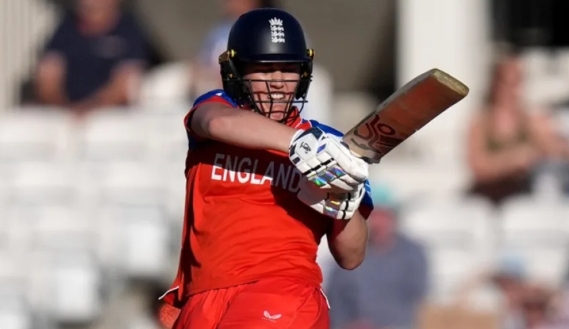
With Kapp bowled out by the end of the seventh over, Sciver-Brunt began picking off boundaries with ease. She was particularly deft at finding the rope through fine leg. Her scoop off Nadine de Klerk was followed immediately by a powerful punch wide of deep midwicket to bring up her half-century. Replacing Sophia Dunkley, who had scored 57, 14 and 49 not out at No. 3 in her absence, Sciver-Brunt made good on a harsh but expected selection call to play a pivotal innings. While she dealt largely in fours – 11 in all, along with a monster six into the stands beyond deep midwicket – Sciver-Brunt showed no obvious sign of her injury while running between the wickets.

Nat Sciver-Brunt rebuilt England’s innings • ICC via Getty Images

Knight joined in on the act, advancing to a fuller ball from Nonkululeko Mlaba and clearing cover before driving Ismail down the ground to close in on her fifty, which she brought up with a powerful slog-sweep for six off Ayabonga Khaka. Knight and Sciver-Brunt departed in the space of three balls as Mlaba made the double breakthrough, but they had done enough in asking South Africa to post what would have been the second-highest successful run chase in T20 Women’s World Cups.

Wolvaardt struggles when it matters most

After a frustrating tournament, Laura Wolvaardt was once again starved of the strike in the first three overs. She faced four balls and scored just two runs but worked her way to a run-a-ball 13 by the last over of the powerplay. If she thought that was the opportunity to find her touch, Sophie Ecclestone, who had not yet begun to work her magic with the ball, quickly showed her that it wasn’t.

Linsey Smith and Sophie Ecclestone combined for Laura Wolvaardt’s wicket • PA Photos/Getty Images

Wolvaardt advanced down the track to try and hit Linsey Smith over mid-on but Ecclestone leapt, reached and bent her back to take a sharp overhead catch and end South Africa’s opening stand on 43. They finished the powerplay with the required run-rate already up at nine an over, and it would only grow from there.

Fielders of dreams

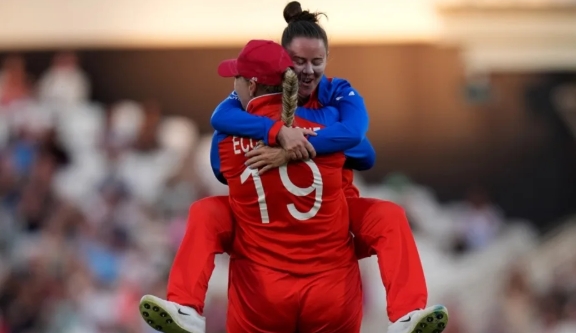
England have been much improved in the field since their fateful 2024 campaign and tonight holding catches proved to be a hallmark of their victory. Ecclestone used all of her considerable height and agility to remove Wolvaardt in a crucial breakthrough, then took another difficult chance over her shoulder running back from short fine leg to take a top edge from Sune Luus.

Knight and Sciver-Brunt held straightforward chances, including the wicket of Tazmin Brits for a fighting 51, and while Charlie Dean missed a chance off Dercksen running back from mid-off and jumping with her left arm outstretched, it would have been a spectacular effort if it came off. Wyatt-Hodge’s direct hit from backward point to run out Sinalo Jafta in the penultimate over epitomised England’s gains in confidence and execution in the field at this tournament.